What Your Posture Says About Your Airway (And Why It Matters More Than You Think)
If I had a dollar for every time someone came into my office saying,
“I just have bad posture,”
…I’d probably have a second clinic by now.
But here’s the thing, it’s almost never just posture.
What I often see is a very specific pattern that tells a much bigger story about breathing, airway health, and oral function.
The Pattern I See All the Time
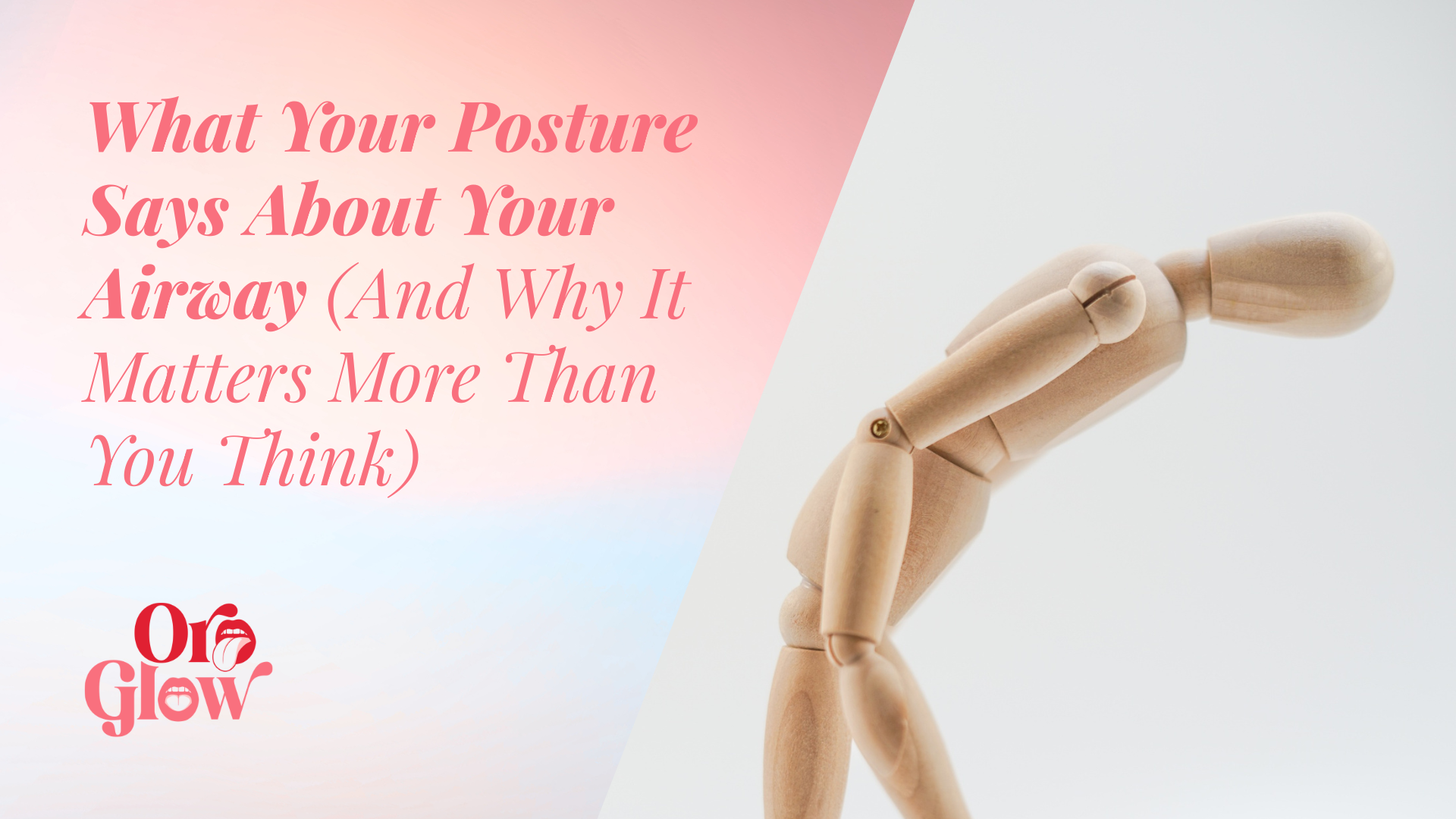
One of the most common postural patterns I evaluate looks like this:
- Rounded upper back
- Forward head position
- Lower back arching (hips tipped forward)
- Shoulders pulled forward
Clinically, we call this a:
Kyphotic-Lordotic Posture
Upper body rounds forward (thoracic kyphosis)
Lower back over-arches (lumbar lordosis)
Head shifts forward to compensate
So… Why Does This Happen?
Our bodies are incredibly smart. It will always prioritize one thing: Getting enough air.
If nasal breathing is compromised, your body adapts:
- Head moves forward
- Mouth opens
- Tongue drops
- Chest breathing increases
This creates a chain reaction:
- Poor rib positioning
- Reduced diaphragm function
- Muscle compensation patterns
- Changes in posture
What I See Clinically
Common findings include:
- Mouth breathing
- Low tongue posture
- Lip strain
- Jaw tension
- Poor sleep quality
- Fatigue
In kids:
- Attention concerns
- Restless sleep
- Feeding challenges
Let’s Talk About the Face
Posture also affects facial structure:
- Slightly convex profile
- Narrow palate
- Dental crowding
- Limited tongue space
Why “Fixing Posture” Isn’t Enough
If breathing is the issue, posture won’t hold. It’ll continue to fight the need for air.
What Actually Helps
At OroGlow, we focus on:
- Nasal breathing
- Tongue posture
- Lip strength
- Jaw stability
- Diaphragmatic breathing
- Nervous system regulation
When function improves, posture follows.
The Big Picture
Posture reflects:
- Breathing
- Tongue function
- Airway support
- Long-term adaptations
If This Sounds Like You
- Mouth open at rest
- Snoring
- Slouched posture
- Jaw pain
- Fatigue
These are signs worth evaluating.
Final Thought
Your body is adapting to help you breathe.
Posture is not laziness—it’s compensation.
And when we understand why, we can create real change.